
|
Research
NC State supports a broad range of research topics that are being vigorously
pursued by faculty and students alike. Click the Facilities link above
to familiarize yourself with the many research facilities NC State Physics
has to offer. Under Areas of Research you'll find a list of research
areas, linking to their respective main sites. Publications links you
to a list of publications, sorted by date, including student-authored
papers. For descriptions of current faculty research, click Current Projects.
To find out how students are getting involved, click Undergraduate Research.
 |
 |
As a Research I institution, NC State boasts a wide variety of cutting edge
research. The Physics Department plays a major role in this effort as its
faculty engages in research ranging from basic to applied; from the nano
scale to the cosmic scale; from table-top experiments to monumental team
efforts; and from pure theory to concrete experiment. The department offers
research opportunities spanning an educational range from summer high school
internships, to undergraduate programs, to graduate thesis and dissertation
research, to post-doctoral fellowships. All research programs are based
on the philosophy that one learns best by doing, and that a complete academic
program must involve research.
The success of the Physics Department is based on excellent facilities,
an outstanding research faculty, and a continuing record of strong support.
Research on the NC State campus is undertaken in the department's 60,000
square feet of space on both the main campus and at the university's
new Centennial Campus. Current external research includes, for example,
efforts at the Triangle Universities Nuclear Laboratory, The Thomas
Jefferson National Laboratory, The Advanced Photon Source, the Spellation
Neutron Source, and the KamLAND Neutrino Telescope.
|
|
|
|
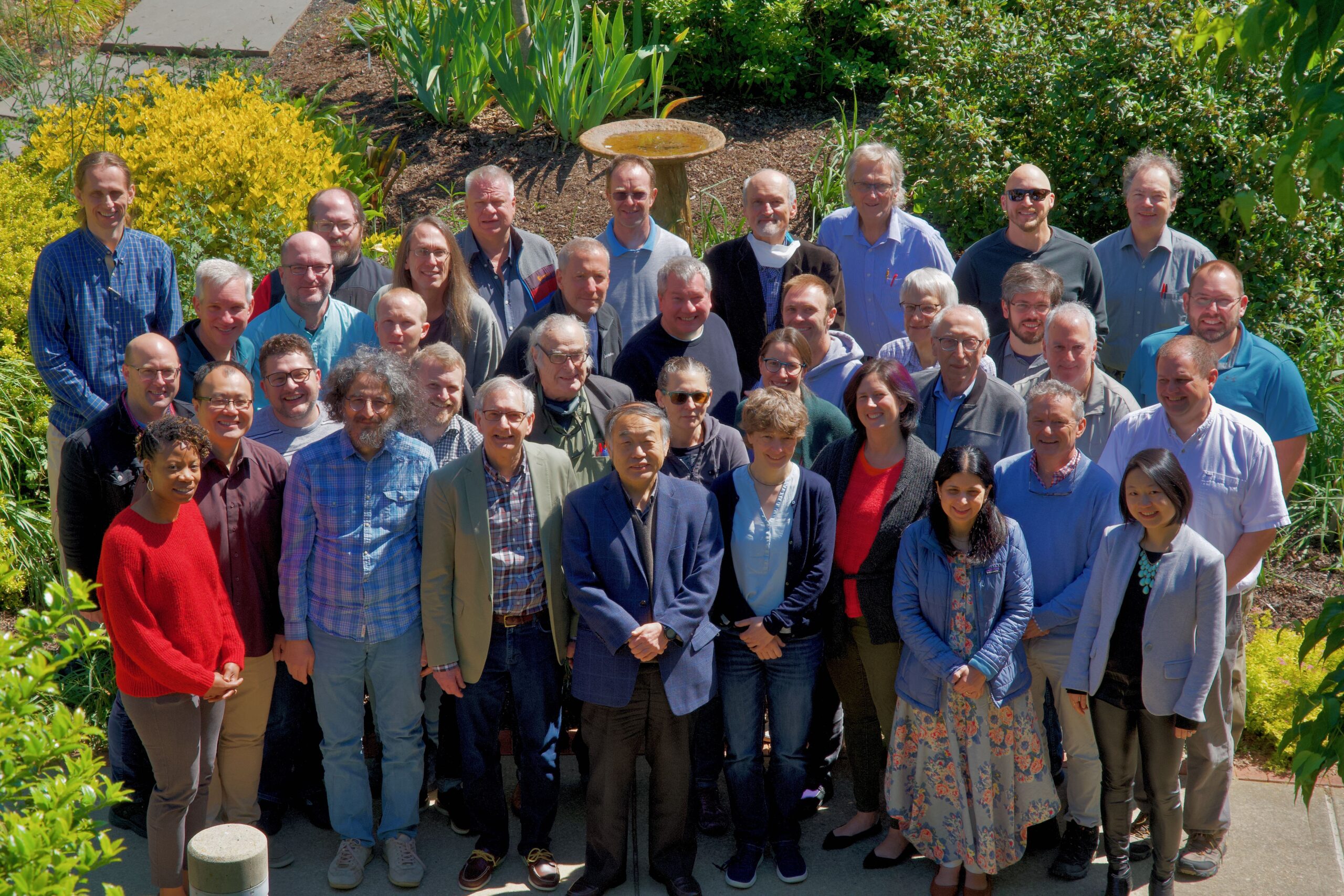
The Physics Department at NCSU consists of 37 faculty members
and some 55 graduate students with additional technical support
personnel and more than 22 post-doctoral research associates.
The research program currently
receives annual funding amounting to about $5 million from external
competitive grants. Sources of funding include the U. S. Department
of Energy, the National Science Foundation, the National Aeronautics
and Space Administration, the Office of Naval Research, and a
wide variety of commercial and industrial organizations. A broad
range of research topics are being vigorously pursued by the faculty
of the Physics Department. |
|
|
|