
Matter and Interactions 205M and 208M:
Class meets for 5 hours each week and students enrolled in a Matter and Interaction
lecture section must sign up for the corresponding Matter and Interaction Lab section.
Tests consist primarily of multi-step problems. Students must start these problems from
fundamental principles, and explicitly show all steps in their reasoning. Grades are
based on work shown, and partial credit may be given for correct reasoning even if
numerical errors are made.
The main goal of this course is to have students engage in a process central to science:
the attempt to model a broad range of physical phenomena using a small set of powerful
fundamental principles.
The specific focus is on learning how to explain the nature of matter and its interactions
in terms of a small set of physical laws that govern all mechanical interactions, and in
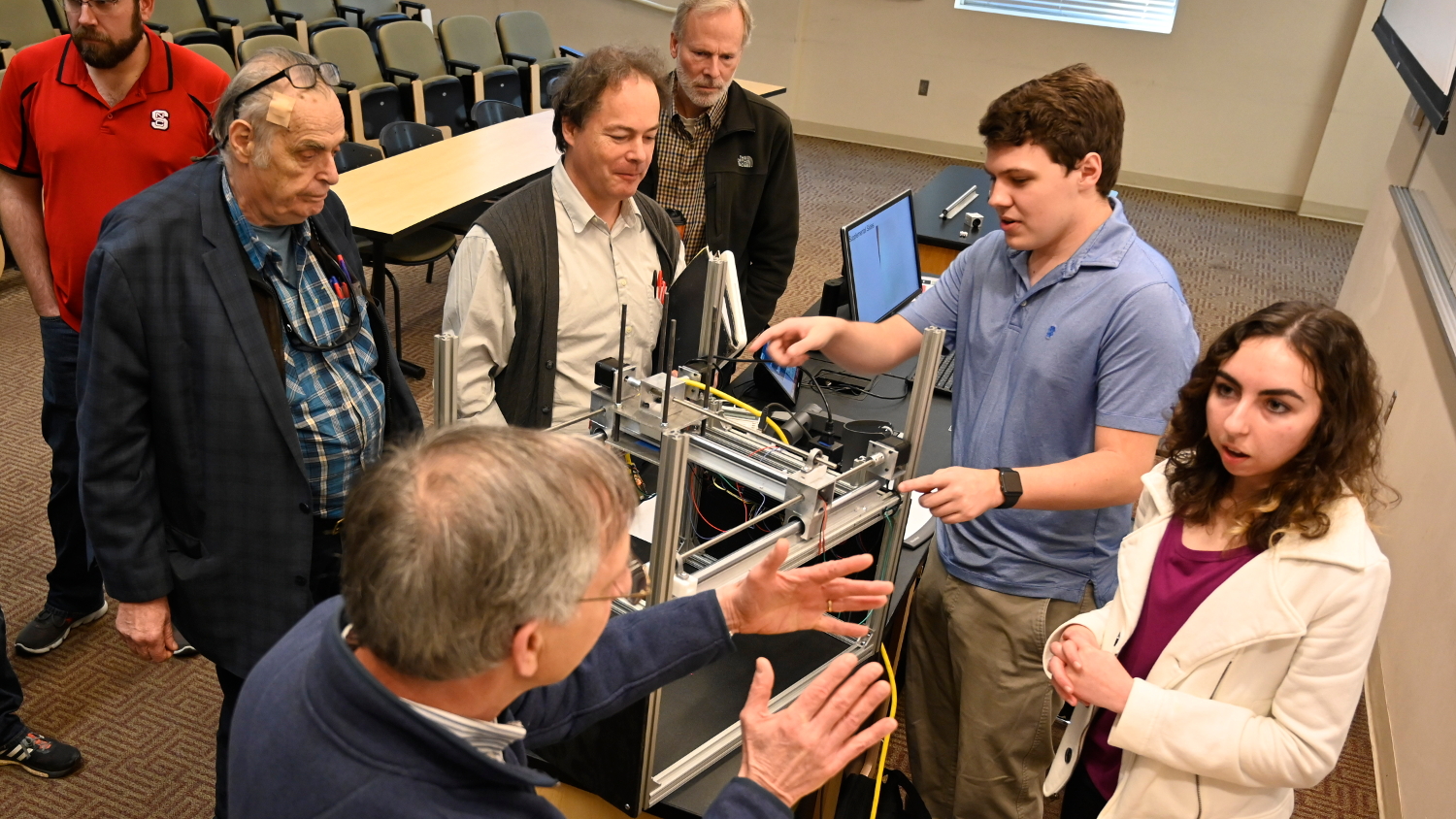
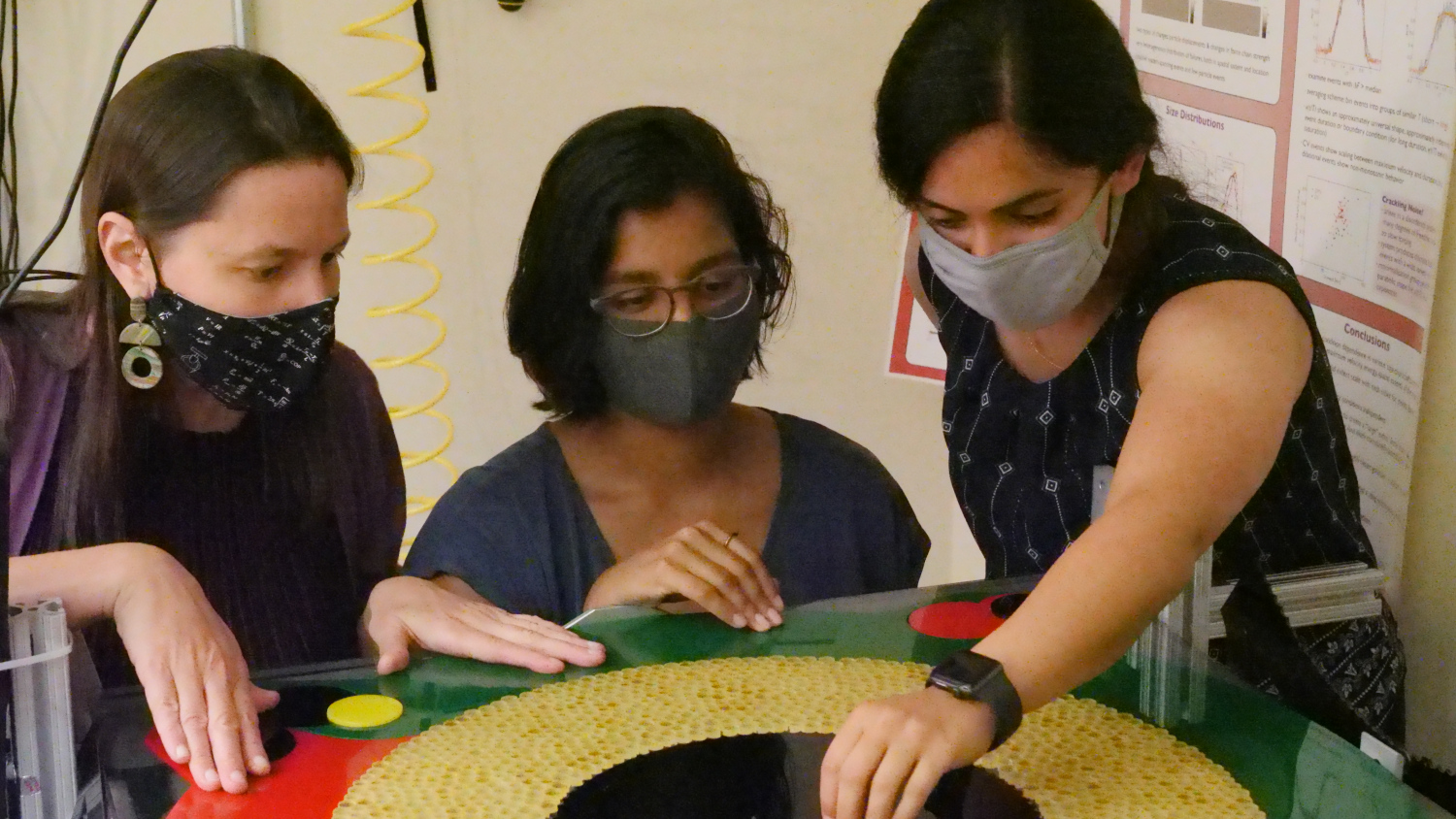
terms of the atomic structure of matter. The course incorporates lectures and studio lab
sessions in which students do experiments, work in groups to solve large problems and do
computer modeling.
SCALE-UP:
Class meets for 5 hours each week and students enrolled in a Scale-Up lecture section must
sign up for the corresponding Scale-Up lab section. These sections have the same physics
content and use the same textbook as the Matter and Interactions sections.
SCALE-UP utilizes interactive, collaboratively-based instructional methods in classes of
up to 100 students. Technology is used to provide a phenomenological focus for students,
allowing data collection, analysis, mathematical modeling, and advanced simulations. As
student attention is drawn to analyzing different physical situations, a teacher and
assistant(s) circulate around the room and engage students in Socratic dialogs. Lecturing
is minimal, primarily for motivation and to provide an overview of topics.
Traditional Curriculum 205N and 208N:
Class meets for 3 hours a week for lectures and 2 hours a week for labs. Tests consist of
75% multiple-choice questions, with the remaining 25% comprised of problems that require
students to show the steps in their reasoning.
The purpose of this course is to provide students with a clear and logical presentation
of the basic concepts of physics and to strengthen an understanding of the concepts and
principles through a broad range of applications to the real world. The course places an
emphasis on sound physical arguments and problem-solving methods.